Auctor raises $20M led by Sequoia Capital

The session agent joins as a participant. No separate setup, no post-call upload. From the first minute, it's listening — not to summarize later, but to build something now.The live transcript is structured as it happens: speaker-attributed, timestamped, organized so nothing gets lost in a long conversation. And as the call moves, Auctor surfaces what matters — open objections, unstated requirements, gaps that could become scope problems. A SOC 2 requirement raised at 3:32. A tracking dashboard request at 16:10. The questions your team needs to ask before the call closes, not after.
One prompt. That's it.
While the call is still running, your team types: Draft initial scope from this call. Auctor draws on your past engagements, your scopes from similar industries, and the way your firm codifies how it delivers — and applies all of it to what the customer is saying in real time.
By the time you hang up, the scope draft is already there. Shaped like your firm's work, grounded in this specific call, traceable line by line to where each decision came from.
No reconstruction. No "I think they meant." No reinventing judgment you've already earned.
After the call, Auctor produces a full meeting summary — insights, open questions, key decisions, and the full attributed transcript. Not a cleanup task. A finished record, ready to hand off or carry forward.
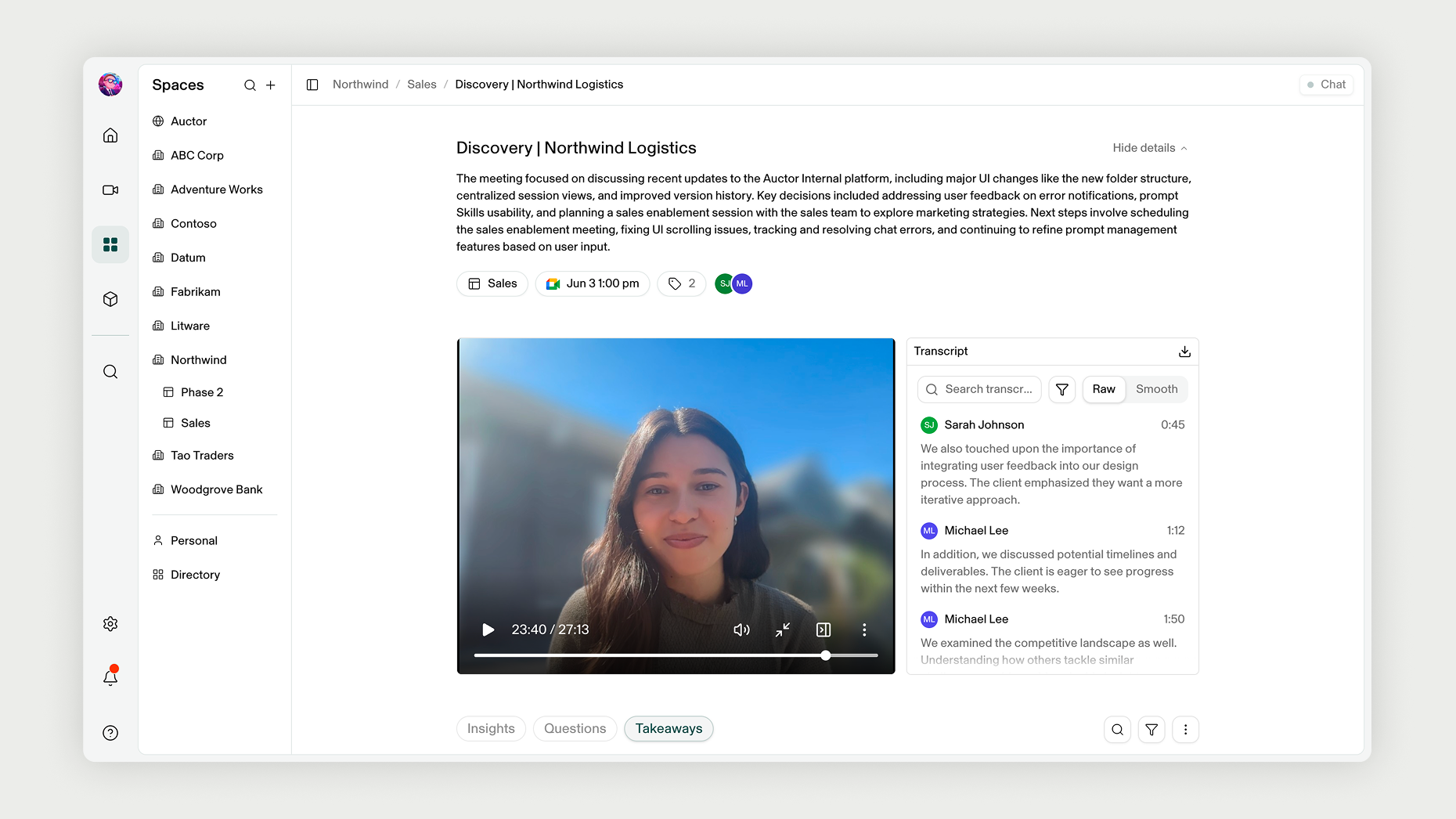
This is one surface of Auctor. The same context — requirements, decisions, objections, scope — flows through design, build, deployment, and ongoing support. What gets captured on the first call still anchors decisions twelve months in.
That's the difference between a meeting tool and an implementation system.
The first call is where implementations are won or lost. Auctor makes sure nothing from that conversation ever gets left behind.